

It turns out that replacing software developers is far more difficult than making bold predictions on social media.
For the past four years, the internet has been filled with one recurring narrative: artificial intelligence is going to replace software developers.
The message was everywhere. CEOs made confident predictions during podcast interviews. Technology leaders announced ambitious timelines at global conferences. Soon after, YouTubers, bloggers, LinkedIn influencers, and Instagram creators picked up the story and amplified it.
Headlines such as “Learn these five skills before AI replaces you,” “The last programming tutorial you’ll ever need,” and “Coding is officially dead” quickly became common across the internet.
The more alarming the message, the more attention it received. Fear-based content generated millions of views because it encouraged clicks, comments, and shares. Meanwhile, thoughtful discussions about AI’s actual strengths and limitations struggled to gain the same level of visibility. That is simply how today’s algorithms reward content.
There is, however, one thing that every prediction has in common. It eventually reaches a point where it can be tested against reality.
Many of the timelines confidently presented over the last few years have now passed. Yet software developers have not disappeared. Companies are still hiring engineers, startups are still being built, and complex software systems continue to require experienced people to design, build, maintain, and improve them.
That does not mean AI has failed. Quite the opposite. Artificial intelligence has transformed the way developers work. It can generate code, explain unfamiliar concepts, identify bugs, write documentation, and automate repetitive tasks in seconds. These capabilities have significantly increased productivity for many engineers.
What AI has not done is eliminate the need for developers altogether.
Building software is about much more than writing lines of code. It requires problem-solving, business understanding, architectural thinking, communication with stakeholders, making trade-offs, and taking responsibility for decisions that affect real users. These are areas where human judgment remains essential.
So what really happened?
Were the predictions exaggerated? Did people misunderstand the technology? Or was the conversation never truly about replacing developers in the first place?
In this article, we’ll examine the claims that dominated headlines, revisit the research behind them, and compare those predictions with what has actually happened. More importantly, we’ll explore why many of the boldest statements about AI replacing developers were never as straightforward as they appeared.
Predictions That Did Not Age Well
Let’s begin with the statements that captured global attention.
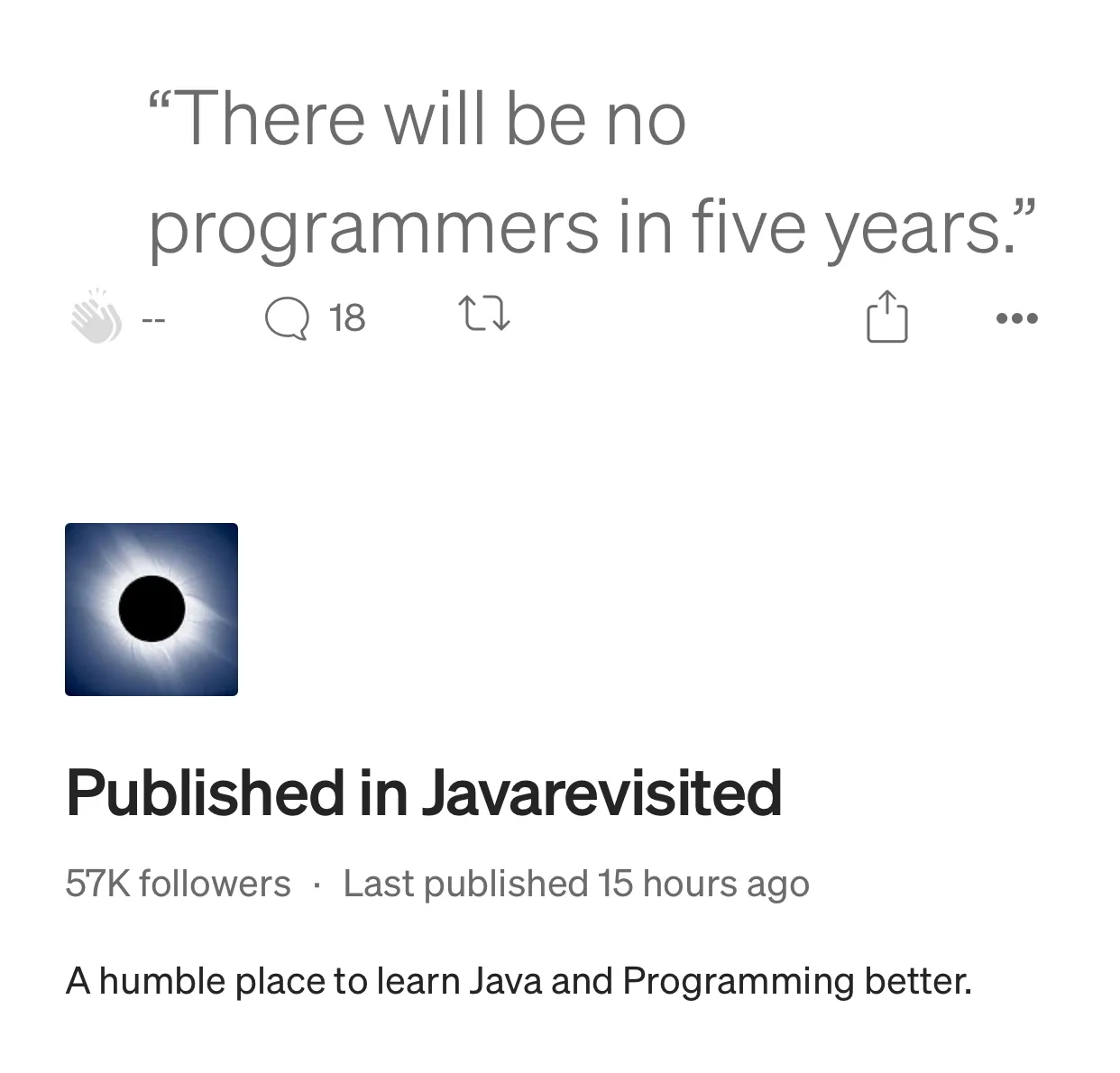
These were the predictions that made headlines, sparked heated debates, and convinced many aspiring developers to question whether learning to code was still a worthwhile investment.
With the benefit of hindsight, many of those predictions tell a very different story.
Discussion
Join the conversation
Sign in to comment, reply, and interact with the community.